Explore swimmer head injury statistics, concussion awareness swimming resources, and head injury prevention tips for aquatic sports.
The complete guide to preventing head injuries in swimming—for parents, coaches, and athletes.
Swimming is a safe sport—but swimmers still hit their heads. Most impacts happen during backstroke finishes or crowded practices. The good news? With the right awareness, training, and equipment, you can reduce the risk and build confidence.
My son, Kaden, was warming up for a backstroke race in a crowded pool when he hit his head on the wall. In that moment, I couldn’t help but ask—why doesn’t swimming have head protection?
Other sports had evolved. Swimming hadn’t.
So I set out to change that—without adding bulk or slowing swimmers down.
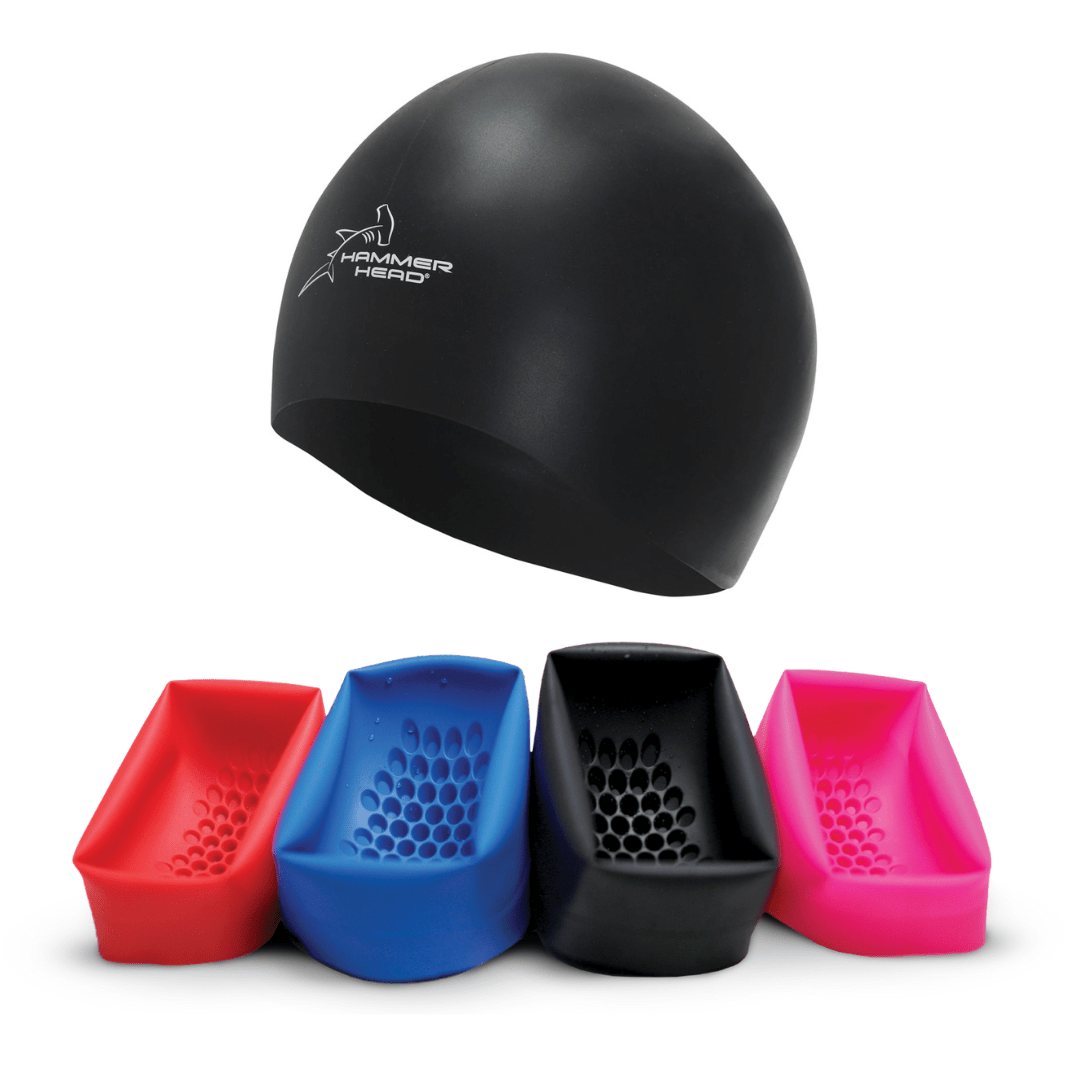
After years of research, designing, refining and expense, we created Hammer Head® Swim Caps—the first protective swim cap with built-in, patented safety technology. It’s sleek, comfortable, and designed to help minimize impact when accidents happen.
A 2019 study conducted by University of California, Irvine found out of more than 1,500 USA Water Polo members, 36 percent had suffered at least one concussion during games or practices. The average was just over two concussions per person, and concussions were more common among females than males. Head injuries can keep you not just out of the game, but out of the pool, for the season in some cases.
Prevention
Your First Line of Defense
Dry land Training
Have your child perform regular neck strengthening exercises to reduce head injury risk in crowded lanes, backstroke finishes, and open water contact.
Swimming Technique
Help your child circle swim correctly, count strokes a the flags or T (and recalibrate with growth) and practice safe lane distancing.
Protective Equipment
Select the only swim cap designed to reduce head impact with cushioning technology while maintaining speed, comfort, and fit.
Dryland Training is Critical
Why Neck Strength Matters
Helps absorb and distribute force when hitting the wall or another swimmer
Improves head control during turns and finishes
Reduces “whiplash” motion that contributes to concussion risk